Exploring how architecture can move beyond obsolescence through a building system designed to evolve over time.
Academic architecture project / ETSAM / 2022 / Enrique Sanz-Gadea
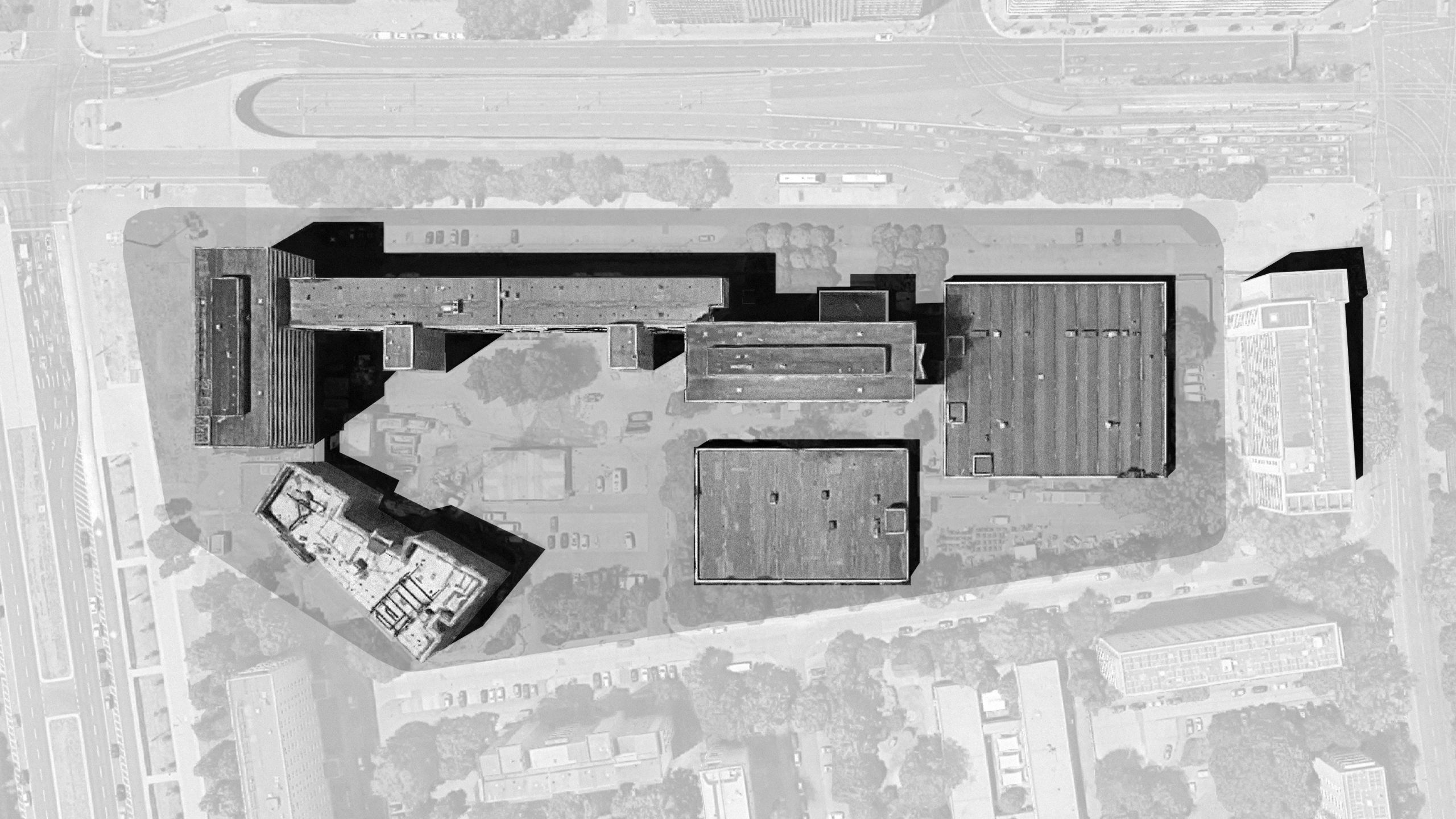
This project develops a renovation proposal for one of the obsolete office buildings of Haus der Statistik, a building complex completed in Berlin in 1968. The work approaches the existing structure as a material and organizational framework capable of absorbing change, rather than as a fixed object to be restored or replaced.
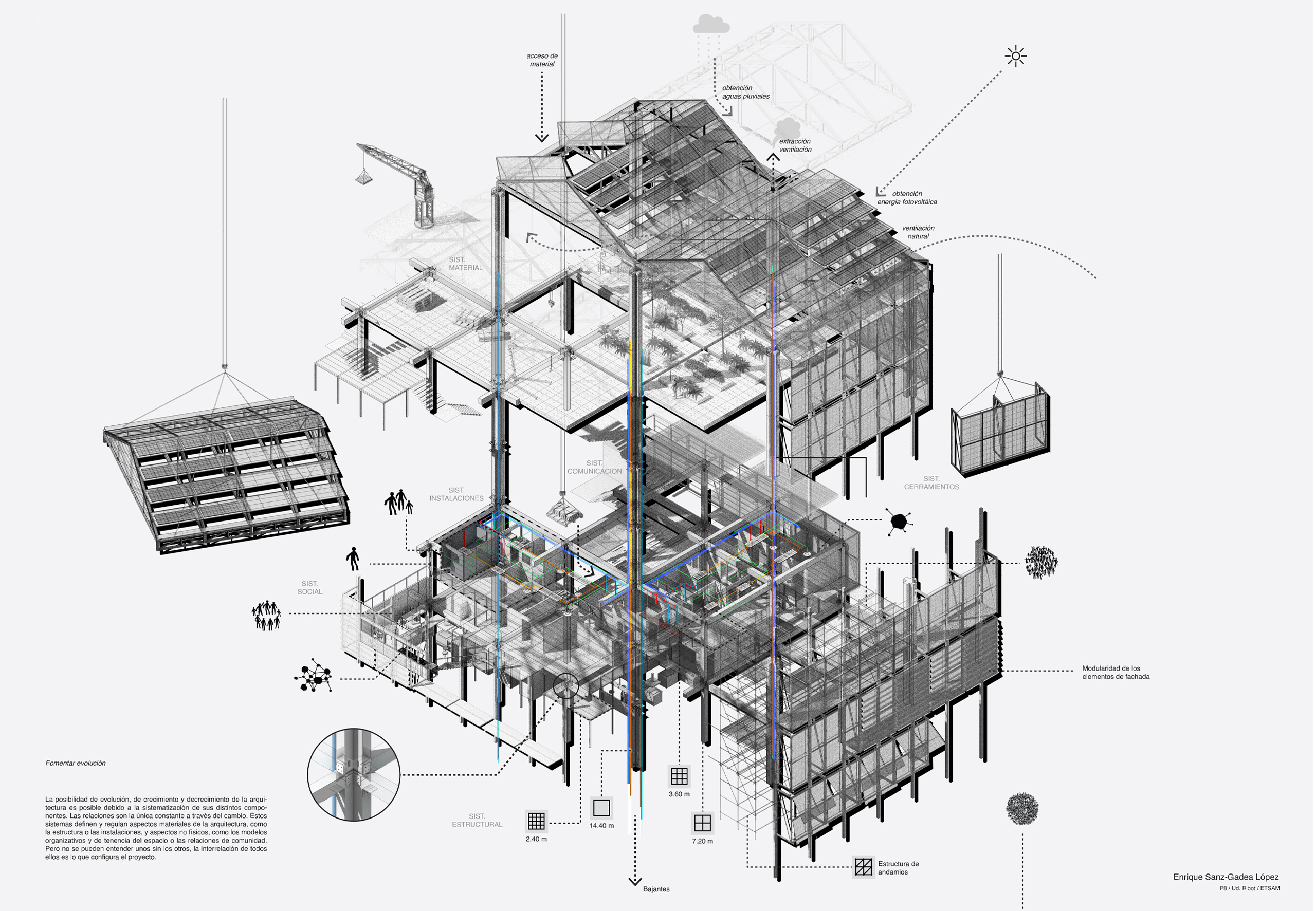
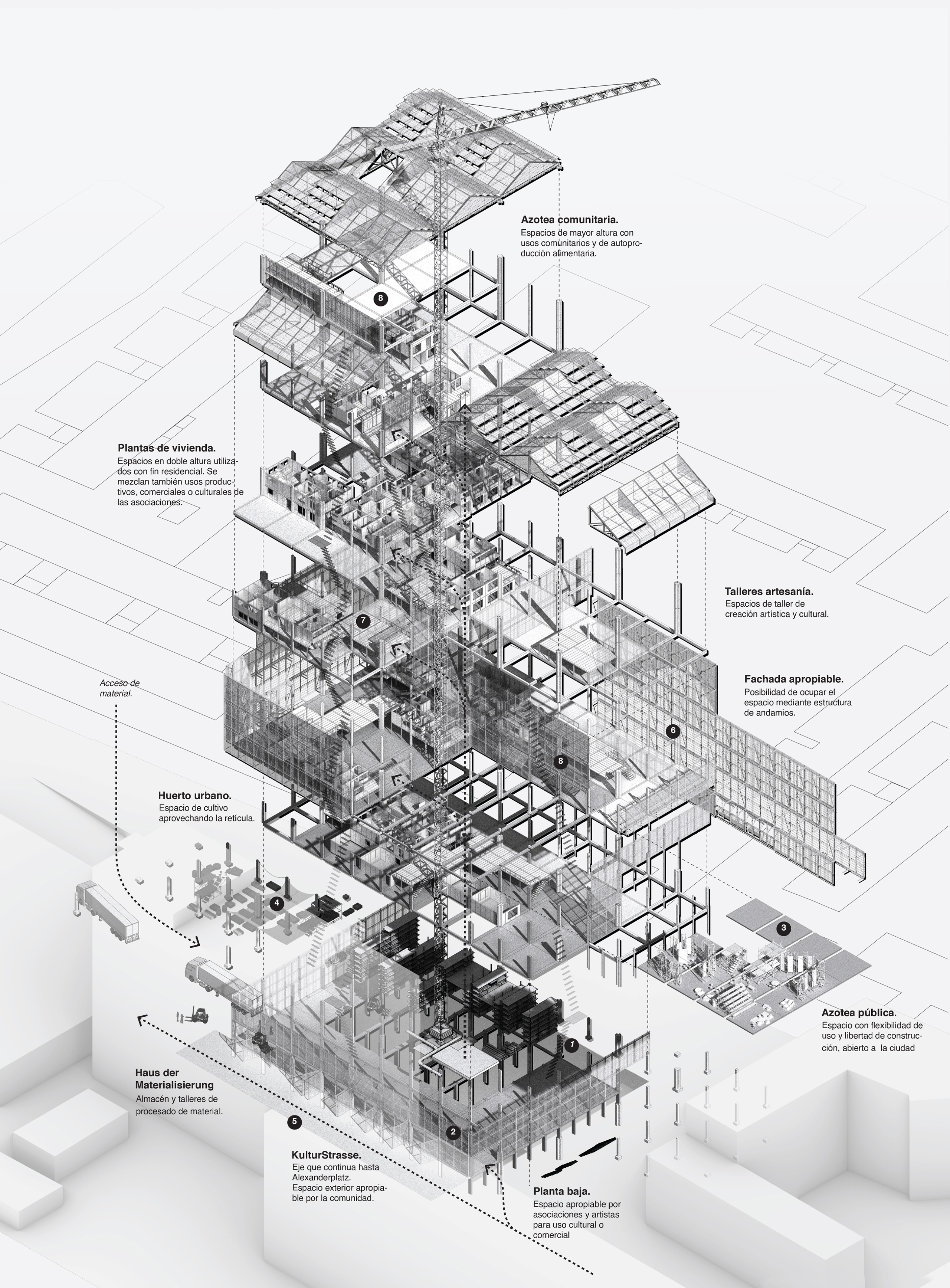
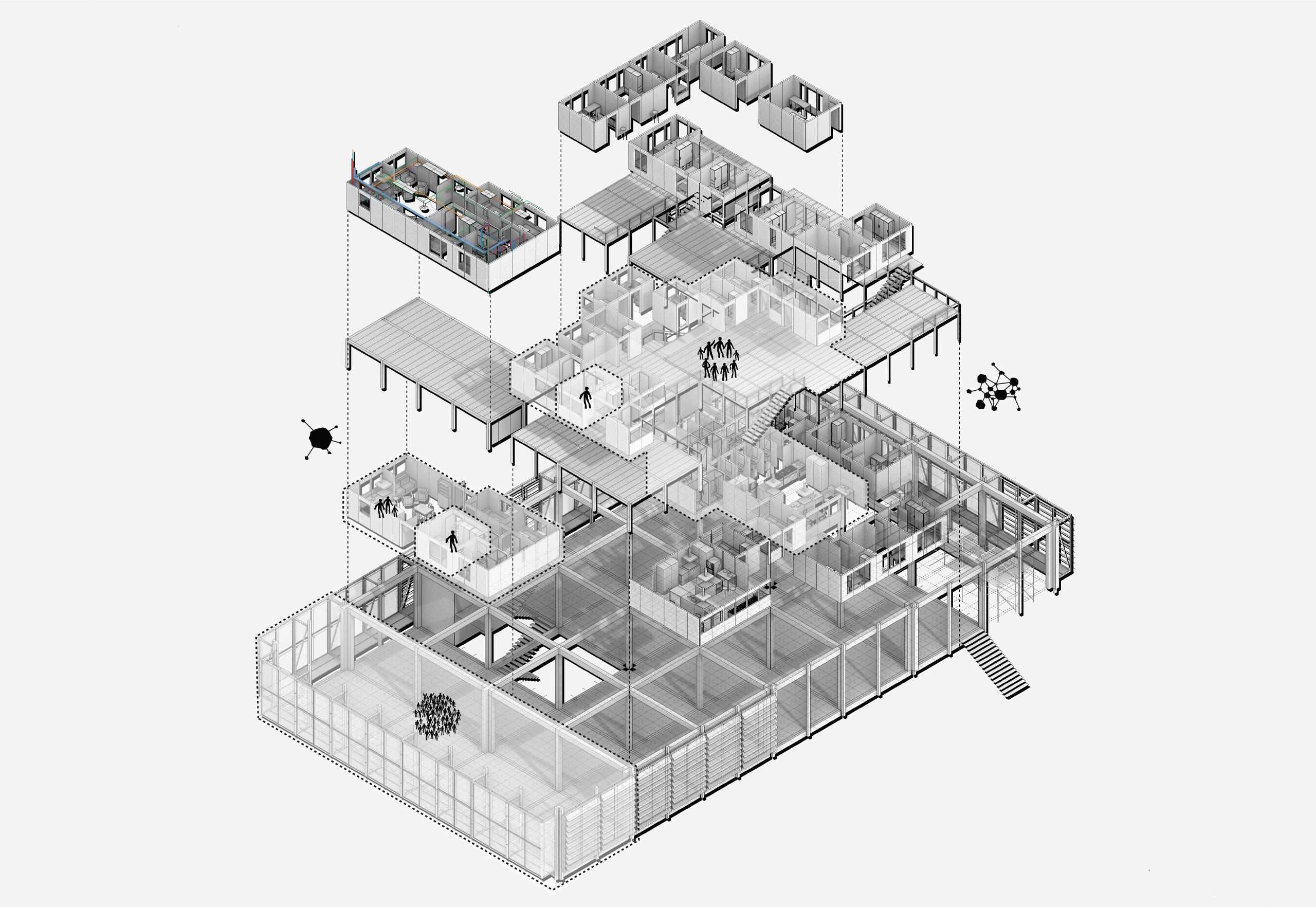
The proposal is structured through a series of interrelated architectural systems: skin, services, circulation, spatial plan and material handling. Each system operates with a different degree of permanence, allowing the building to transform across overlapping dimensional and temporal scales.
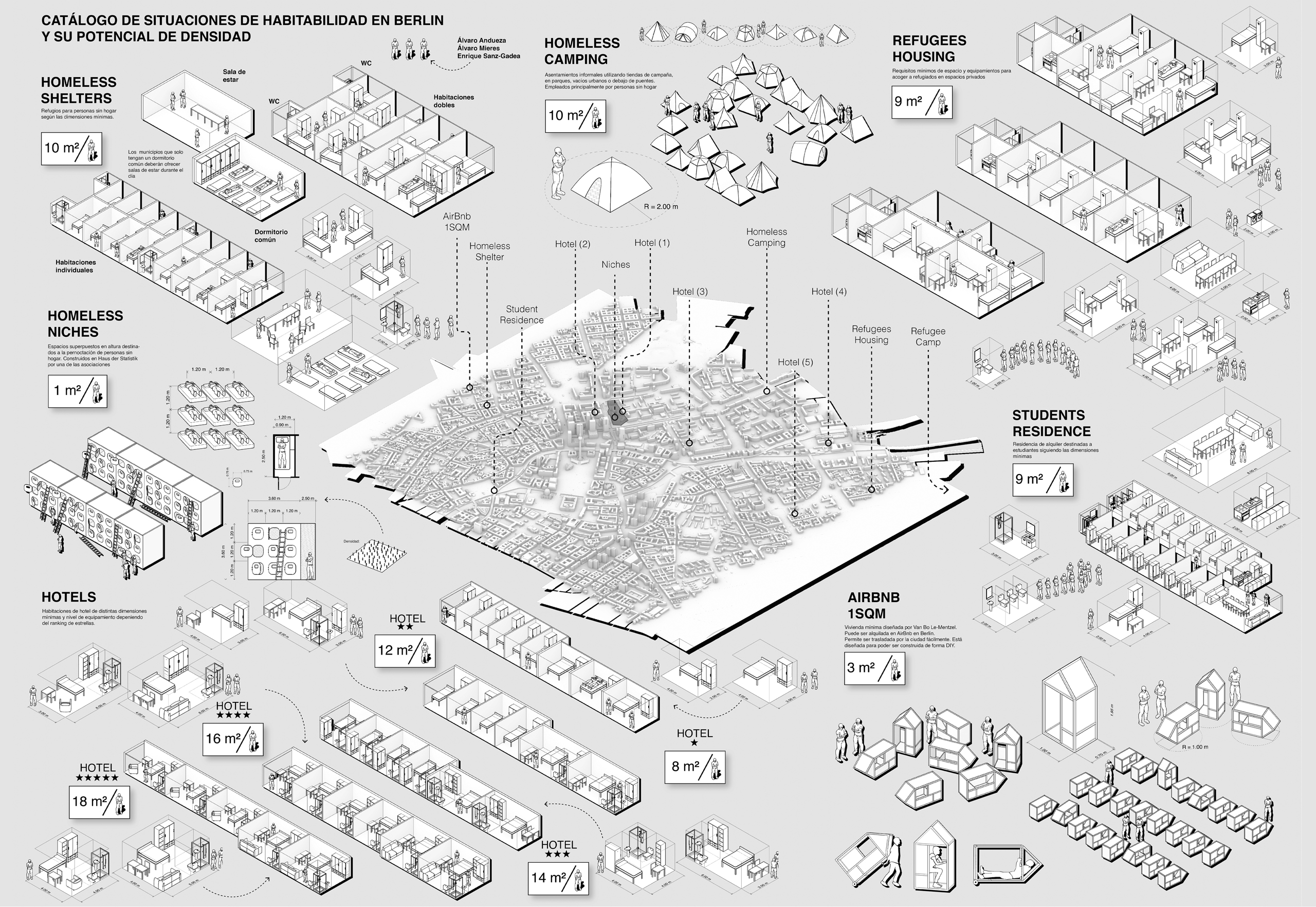
The interior organization draws on the principles of German Baugruppen while working across several scales of inhabitation, from individual rooms to collective structures. Different densities and forms of use can coexist within the same framework, reinforcing the project as a shared and adaptable environment.
Material circulation becomes one of the central conditions of the proposal. Workshops and storage areas on the lower floors receive and process material brought in from the city. Once transformed into modular architectural elements, these components can be moved through the building using cranes and lifts, and later dismantled, reused or recycled as the project continues to evolve.